
Creating an Anarcho-Punk Archive: A Conversation with Dunstan Bruce of Chumbawamba and Researcher Seth Wheeler
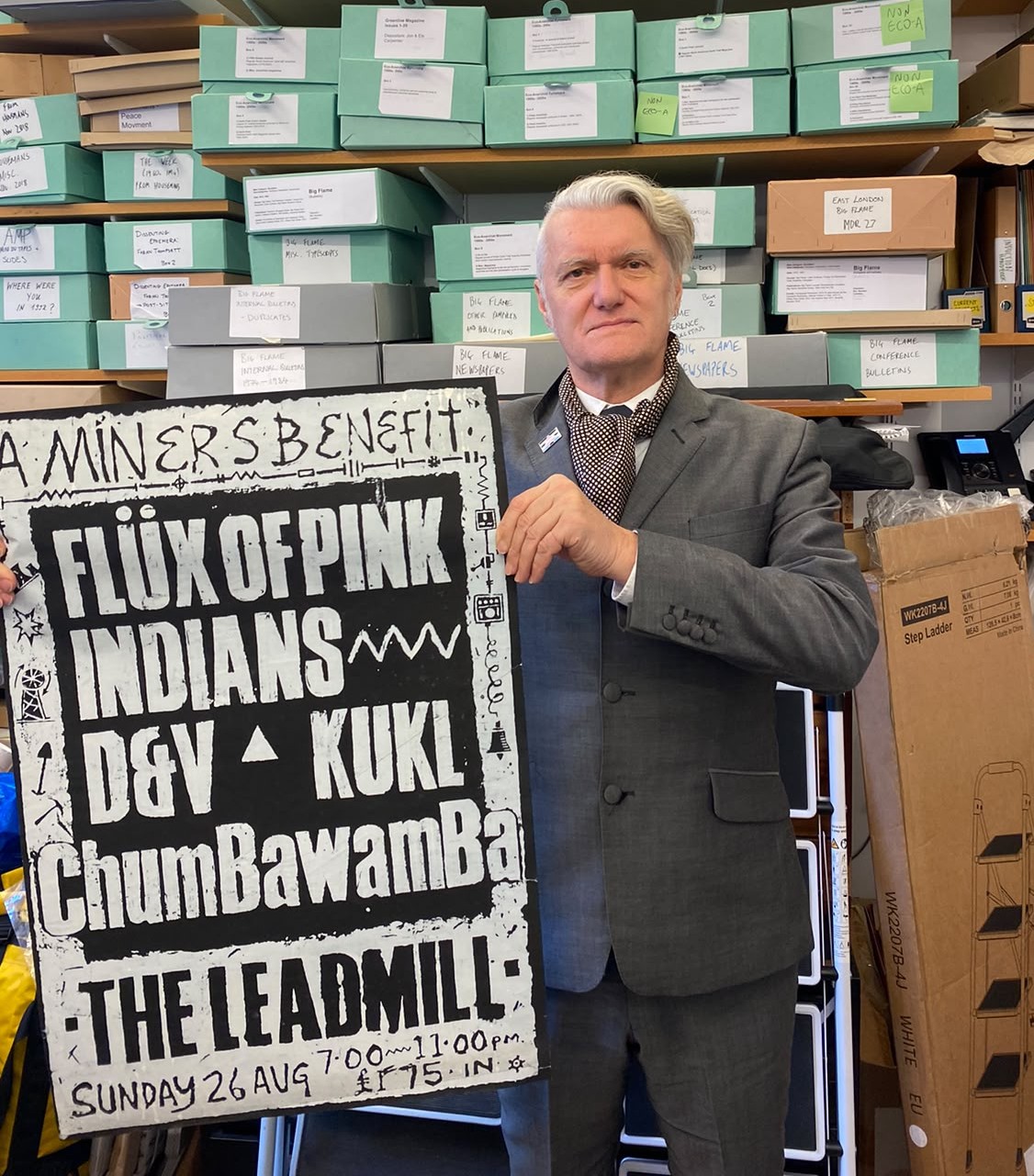
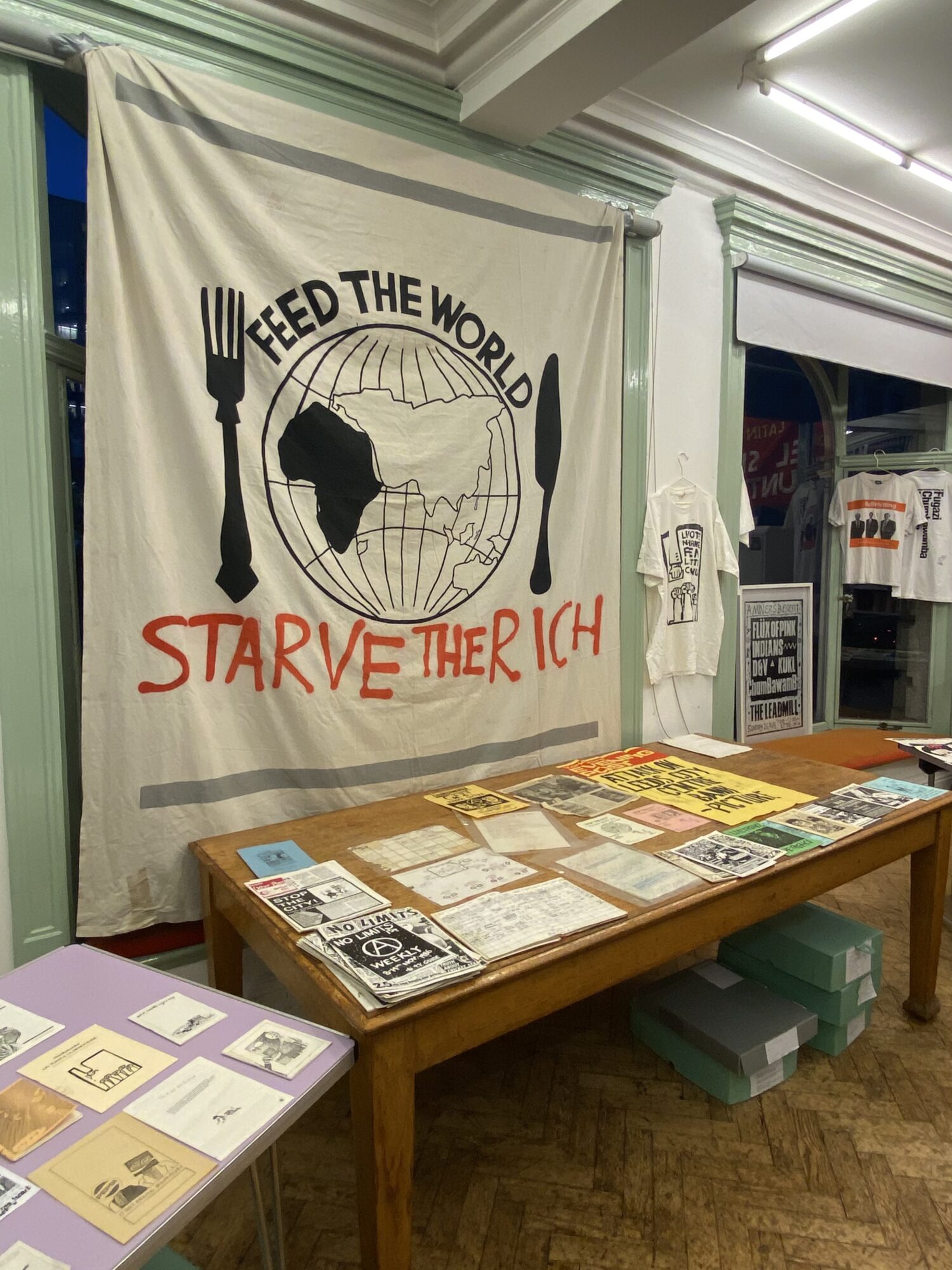
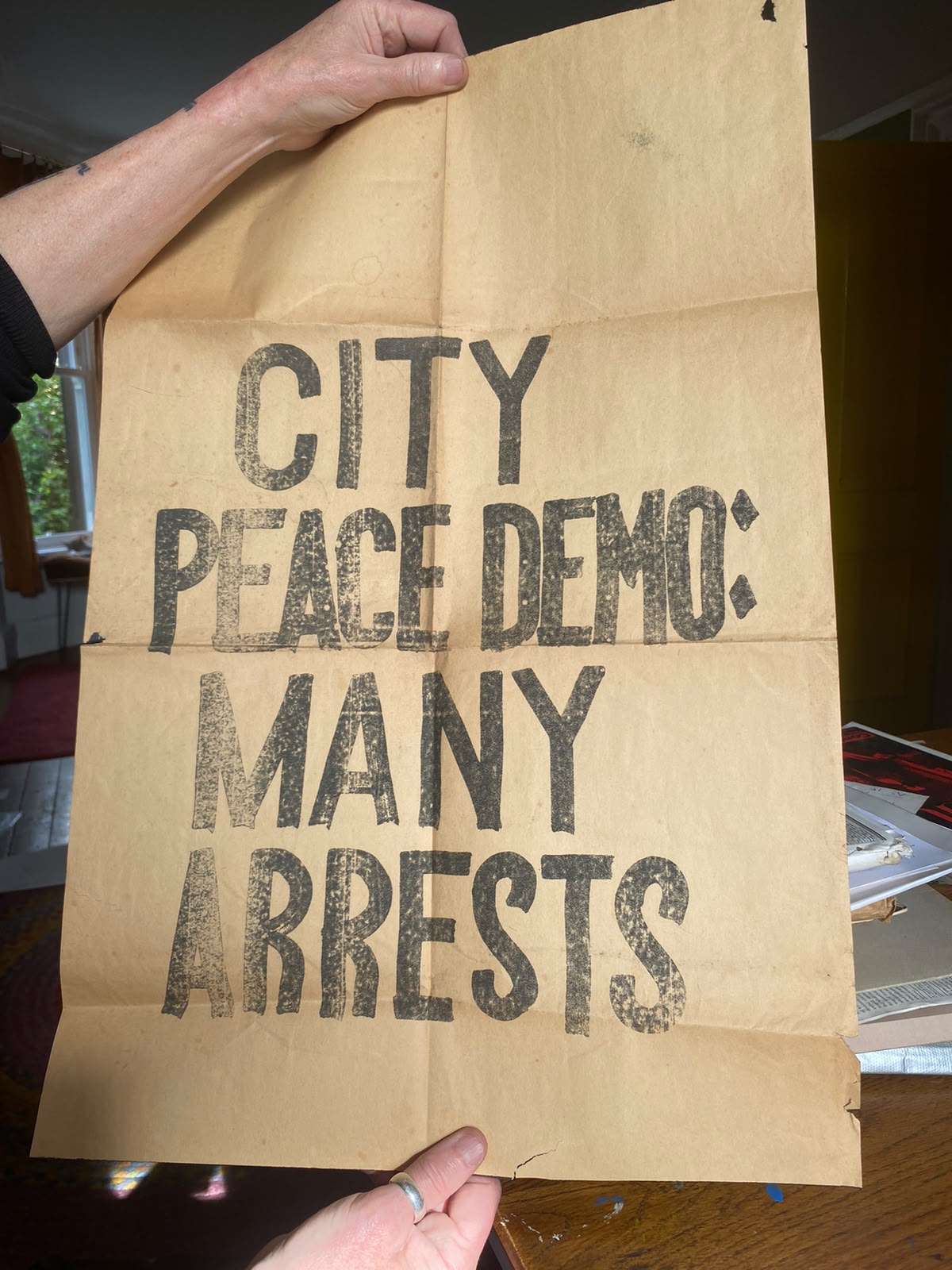
MayDay Rooms is an archive and organizing space based in London, England that is dedicated to radical left-wing social movements and experimental culture. It was established about 10 years ago and has over 100,000 items of historical material relating to campaigns of resistance and social struggles, the majority of which are from Britain, but also increasingly around the world. They run a full programme of events, free of charge. One of the most recent projects at MayDay Rooms is a newly growing Anarcho-Punk Archive, tracing the movement’s influence over anarchist thought and practice, radical politics, collective experimentation, and DIY culture throughout the ’80s and ’90s in the UK and beyond. Helen Grant and I attended the Anarcho-Punk Archive launch event at the MayDay Rooms on 18th June 2026. A month later, we both sat down to have a conversation with Dunstan Bruce of Chumbawamba and Seth Wheeler, a London-based independent researcher, about how the project came about and their potential future plans for it, as well as a general discussion about political music, radical DIY culture, collecting, and the state of anarchism in the UK in the current climate.
Interview conducted with Helen Grant. All photos by Seth Wheeler unless otherwise specified.
Zanne: So, start with telling us how the Anarcho-Punk Archive came about. How did you get involved?
Seth: Well, I have been doing independent research at the MayDay Rooms on and off for many years. While I’ve no formal archival training, my background is in a lot of the very movements documented in the MayDay archives.
As part of MayDay’s educational commitment of talking to younger militants about the past, I’ve often done events for MayDay Rooms using their other archive collections. I was in there one day going through a huge box of ephemera from the late 1970s and early 1980s, and, in this, I found a series of minutes belonging to comrades organising the 1983 Stop the City protests. The minutes contained all the standard stuff: “Haringey anarchist group say this, Hackney anarchist group say that.” But among all this, I saw “Crass say this…”, which made me remember—these bands weren’t just musicians, they were also affinity groups who used music and culture as part of their repertoire and, as such, were as politically sovereign as any of the other groups in the room.
That really kickstarted an attempt to try and trace anarcho-punk material throughout the MayDay Rooms archive. Surprisingly, despite the fact that a lot of these bands intersect with a lot of the activist groups cataloged here—often doing benefits for them—we didn’t actually have a lot of material in the collection specifically related to anarcho-punk. So, I approached MayDay with a proposition to build a dedicated collection, and they were very pleased to support it. I then put a call out to some mutual friends, like Alice from Chumbawamba. Chumbawamba were the first group to get back to me. Dunstan has really been driving this project as well, and we are now running the wider project together.
Dunstan: Yeah, that’s a brilliant explanation. Seth and I first met at a Crass event at The Horse Hospital in London. It was the launch for their book Crass: A Pictorial History, and, as part of that event, we had to sit and listen to Yes, Sir I Will. Wait, or was it Christ the Album? I can’t remember now. I think it was Christ – the Album.
Helen: The whole thing!?
Dunstan: Yeah, the whole album! I was there with Sophie, who I made the I Get Knocked Down Chumbawamba documentary with. She doesn’t come from an anarcho-punk background, but she weirdly enjoyed it. I was traumatized by the whole thing. Then Seth came up to me at the end of it and said “Hi, can we talk about your archive?”
I had been massively interested in doing something with the Chumbawamba stuff ever since we made the documentary, because we made that film not as an archive piece or a nostalgia piece, but thinking more about what to do now as activists and how to remain relevant entering middle age.
We had looked at a lot of the archive stuff in the film, but we skimmed through a lot of it to talk about more contemporary issues. I always had this longing to go back and explore the whole back catalog and archive. So Seth and I then met at the MayDay rooms, didn’t we?
Seth: Yeah, and it’s been a bromance ever since, haha.
Dunstan: I can’t stay away, and I just go through my cupboards every day to see if I can find something else to add to the archive.
Zanne: Talking about collecting and middle age, we are often only able to really reflect on things we were involved in with some distance. I guess it’s a part of getting older or just having some separation from the immediacy of what you were involved in, where it’s hard to see the impact until some time has passed.
Punks have always collected things—records, zines, etc.—and still do, of course, but for most it started out for those personal reasons, being a part of something, more inward looking in a way. Certainly in the last fifteen years or so, there’ve been a lot of books, or even exhibitions about the impact of punk in general, and anarcho-punk, too.
Dunstan: Did you both go to the Mick Jones pop-up exhibition in London?
Zanne: The Rock & Roll Public Library! Yeah, Helen and I both saw that actually. We just stumbled upon it.
Dunstan: Seth went every other day, haha. I only went once. But I found it really inspiring for what we could do with our archive. I thought they approached it in a slightly different way than you usually see people’s personal archives, and I was sort of inspired by that.
Helen: Yeah, it was really engaging, wasn’t it? Having bands playing there every evening also just really brought everything to life.
Seth: It was interesting in terms of how it was curated, and how you felt that you were situated in that moment. In the exhibition, they constructed a living room installation setting, that was all full of very chintzy 1970s working class stuff. It reminded me of my gran’s flat, and I think they did a really good job of putting you, as a contemporary person, back into that moment.
Back to the anarcho-punk archives, there have been ongoing ideas of other ways to engage with it beyond the usual events that we also want to continue to do. One of MayDay’s core missions is to connect its archival material with contemporary moments of class conflict or struggle, so that people can learn lessons or identify mistakes in the past and try to think through how we can learn from that. We were thinking at one point of doing an exhibition too, which is still on the cards, I think.
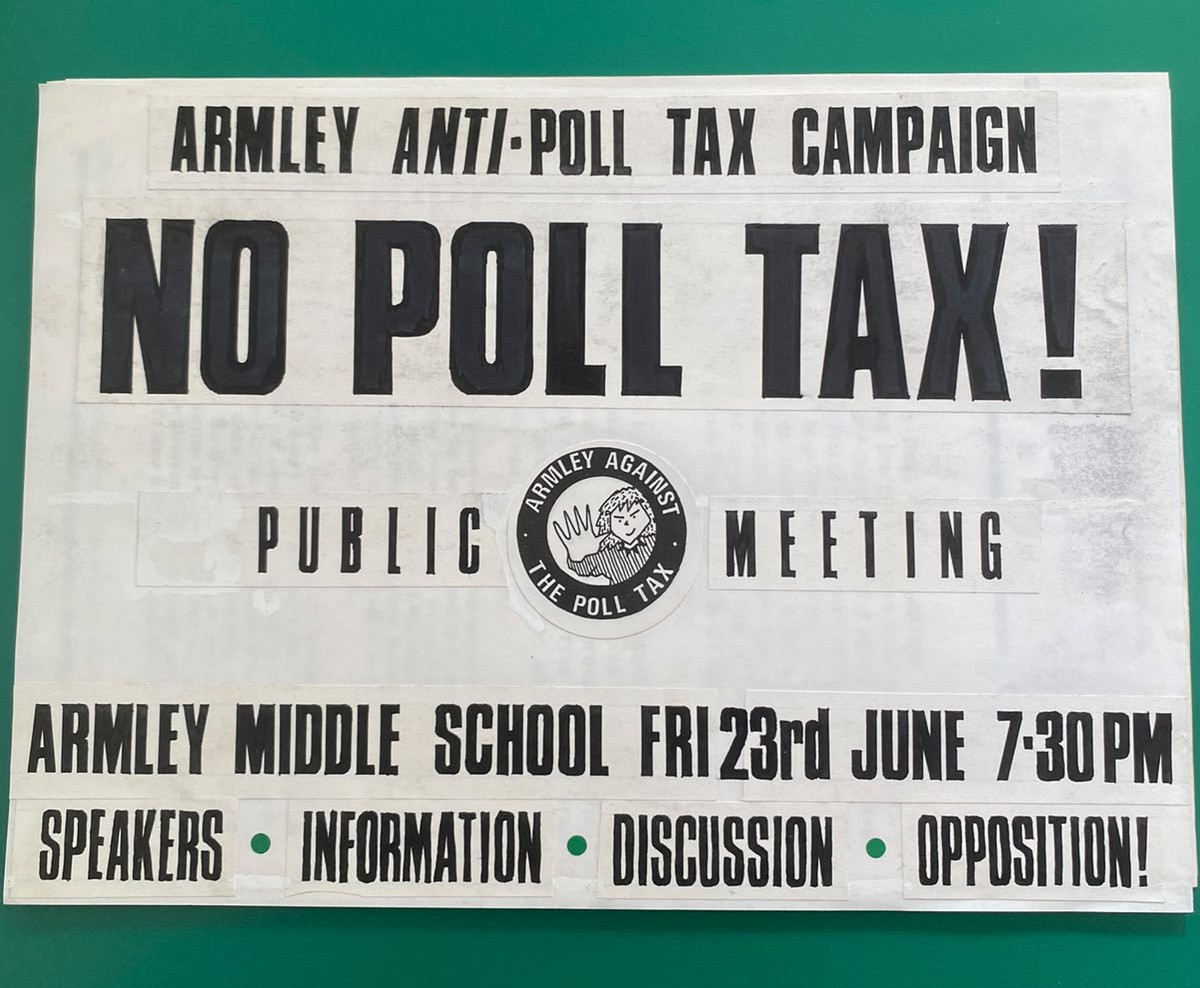
I would argue that what’s interesting about Chumbawamba is that if you look at MayDay’s archival material through the causes and the campaigns they were doing benefits for, you can see just with this one band a history of radical social movements throughout the UK and further afield in the ’80s and ’90s. If you look at the band’s internal minutes, they explain what forms of direct action Chumbawamaba were involved in themselves—it moves from early days involved in animal liberation all the way through to the miners’ strike, anti-poll tax organizing, the Criminal Justice Act, and into the early stages of the Alter-globalization movement. MayDay Rooms has archives relating to all those other struggles themselves, so we could really fill out an exhibition. It doesn’t have to be about Chumbawamaba per se, but Chumbawamba are sort of unique as they’re one of the only anarcho bands that seem to really jump across all of that stuff.
Dunstan: When Sophie and I were making the film, we did this interview with a friend of mine, Lucy Robinson. She is a professor of modern history that does a lot of stuff around punk, counterculture, and queer culture. She said this really interesting thing about how it was like we were making a film that could be asking whether Chumbawamba was a blueprint for what new movements could do. So, we tried to make the film in a very critical way, pointing out things like, “Oh, maybe that wasn’t the best decision when we did this,” or “This is actually why we sacrificed our credibility to have a much bigger stage, or to be able to give money to organizations that we support.” I think those questions are still relevant today. I still get asked in interviews if political music still exists. Obviously it does, massively. It’s where you look for it, isn’t it? It’s become mainstream again, I guess, and so I think it’s interesting for us to talk about those ideas and how we want to talk to a younger generation. We want to engage the younger generation in this archive idea, because we don’t want it to be just an exercise in nostalgia.
Helen: Dunstan, at the opening event you talked a lot about letter-writing in the anarcho-punk scene.
Dunstan: Yeah, a big thing in the early days was soaping your stamps. You used to soap your stamps, so whoever got the letter could clean off the postmark and use the stamp again, and that was part of that culture, you know, that’s what we did. It was funny, but that’s obviously not a thing anymore.
Seth: One of the events we are thinking about is a meeting with delegates from bands who self-identify as anarchist and anti-authoritarian to see if we can build a contemporary network of bands who are happy to share resources with each other. So, it could be like a material mutual aid network: “We’ve got a tour coming up. We need a band to help us, or do you have a van or whatever?”
But we also wanted to see whether, through those meetings, we could all collectively agree to co-ordinate for direct action—something as symbolic as, say, a demonstration next year. Could we get all those bands to coordinate, to mobilize, to use their gigs to advertise a big demo or action? It may be easy to get a sizable block of those bands onto a demo. That’s probably already a couple hundred people on the block. We would like to test the thesis rather than going, “Well, it’s just something in the past”. You know, let’s have a roll of the dice and see where that lands. And I mean, if that fails, it fails. But at least it’s an attempt, right? And we can think about how maybe then that opens up the question: Why would that fail now?
Zanne: But of course there still is a very active DIY underground anarcho/political punk community that’s influenced by the original bands and movements from the ’70s/’80s. So I think there are a lot of bands out there, both here in the UK, and everywhere really, that might be interested in getting involved in a larger more collectivised/cohesive thing.
Dunstan: I do see a lot of that in the Loud Women festivals. They seem to have taken those ideas without ascribing a political label to it. It’s just like a DIY movement, which seems to be working. There’re Loud Women festivals cropping up all over the world. I think that’s the kind of thing we’d like to experiment with, and I think we want to do some other educational events. We’d really like to do things with younger bands as well.
Seth: We were also talking about whether it was necessary to put out a contemporary version of the Bullshit Detector compilations or something, given how pivotal those compilations were to the formation of the early anarcho-punk movement.
Dunstan: But also, we’ll be collating stuff into maybe a catalog or book or whatever. There are opportunities to do stuff that has a wider appeal if we’re talking about anarcho-punk, rather than just Chumbawamaba.
Helen: There have been a number of exhibitions about punk in recognized galleries, haven’t there? But they’ve been produced by the gallery curator institutional system. So I guess it’s only right that the anarcho-punks do it themselves, isn’t it?
Dunstan: What was the recent exhibition called at Tate Britain? Women in Revolt? Despite the institution, that was actually good.
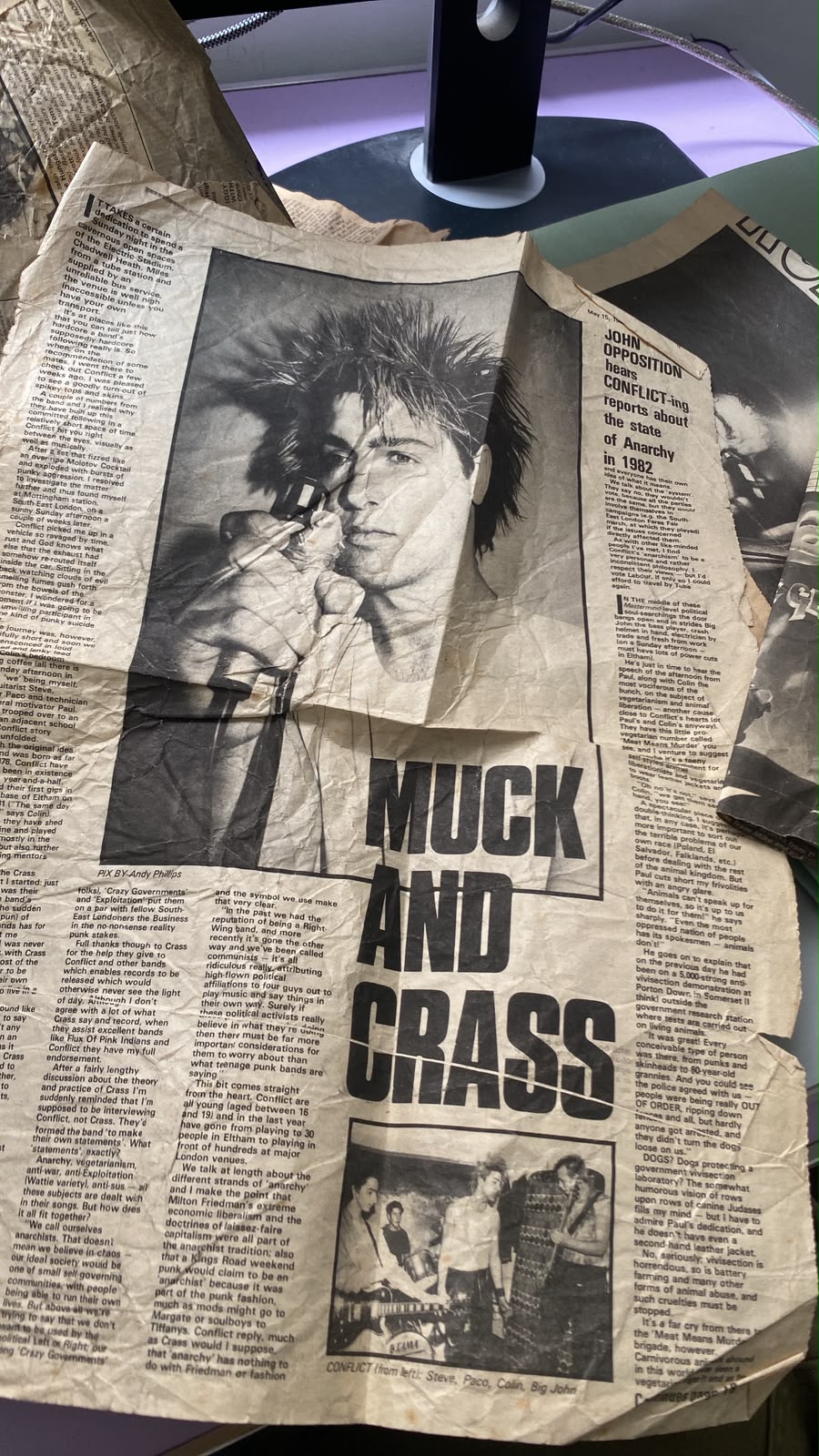
Seth: I think MayDay Rooms did lend some materials for that. Returning to Bullshit Detector and Crass Records, another thing we have been thinking about is just how important those record sleeve notes were. I grew up near Slough, which is hardly a fiery hotbed of revolutionary politics. It was coming across things like Chumbawamba, Conflict, or Crass albums that got me into politics. And within a year of listening to those albums, I’d made my way into London to find Freedom Bookshop because it was listed as a contact on the back of one of the albums.
So, yeah, back then a bit of effort had to go into finding this stuff, right? Which is probably why everyone’s so heavily invested in debating its history and why it’s so important to everyone personally. I don’t know whether we can repeat that in an era where you’ve got social media.
Zanne: Yes, things are so much easier to come across now with social media. Everything feels really accelerated, being constantly connected or bombarded, that younger people now can easily find out about bands and sociopolitical movements in a very different way than previous generations could. With that I guess it’s also become much easier to move in and out of things, without getting too invested. That community aspect of being involved in something was really important back then, and I would argue that in a lot of ways it still is now, but maybe doesn’t show up in the same kind of way.
Dunstan: Yes, it was really important. I think what we disagreed on, Seth, was whether we enjoyed the music or not. Haha. I think you probably enjoyed the music a lot more than I did, but that’s what was fascinating about anarcho-punk, that if I couldn’t enjoy the music, I could feed off the visuals, the lyrics, and the essays. It was the whole package. I went to loads of gigs where I wasn’t particularly bothered about the music but went more to be part of a social and political network. That was a really important place to make you feel like you weren’t alone, that there were other like-minded people. That was a really important thing. That’s what was really good about the Bullshit Detector albums: how they helped connect people around the country when there wasn’t the internet. So, we would write to all of the bands on those compilations to try and find links and work with each other, like a mutual aid system. It was great. Those albums having those extra layers made it feel a lot more inclusive than it just being about a particular style of music.
Weirdly, I was talking to Sophie this morning about when MRR stopped reviewing Chumbawamba albums.
Zanne: Oh, hahaha.
Seth: You sell-out bastard! Haha!
Dunstan: I think it was Slap! I think we broke MRR’s back with that album. We were doing everything exactly the same—still completely and utterly political—we just changed our style of music. I think Tim decided that was it. We’d gone too far.
[Editor’s note: musical criteria for MRR’s record reviews are the same now as they were then and can be found here.]
We still felt we were part of that milieu, though. We were still making contacts with anarcho and punk bands from scenes across the world.
I mean, I think what’s amazing about the Bullshit Detector albums and the bands on Crass or SpiderLeg records, especially in that initial wave: all the bands were so different from one another and very experimental. Everything from like Annie Anxiety’s quasi-industrial dub to Zounds weird sort of stuff.
Zanne: The Mob.
Seth: The Mob!
Zanne: Haha. That’s all a big part of what drew me into punk as well. It wasn’t just the music, it wasn’t just the politics, it was the community and all the visuals as well. As an artist myself, it was the whole package that drew me in. The artistic aspect of it, being surrounded by people who were a bit like-minded, where people could come into it and add to it from lots of different perspectives. There were lots of different ways you could participate and be a part of it.
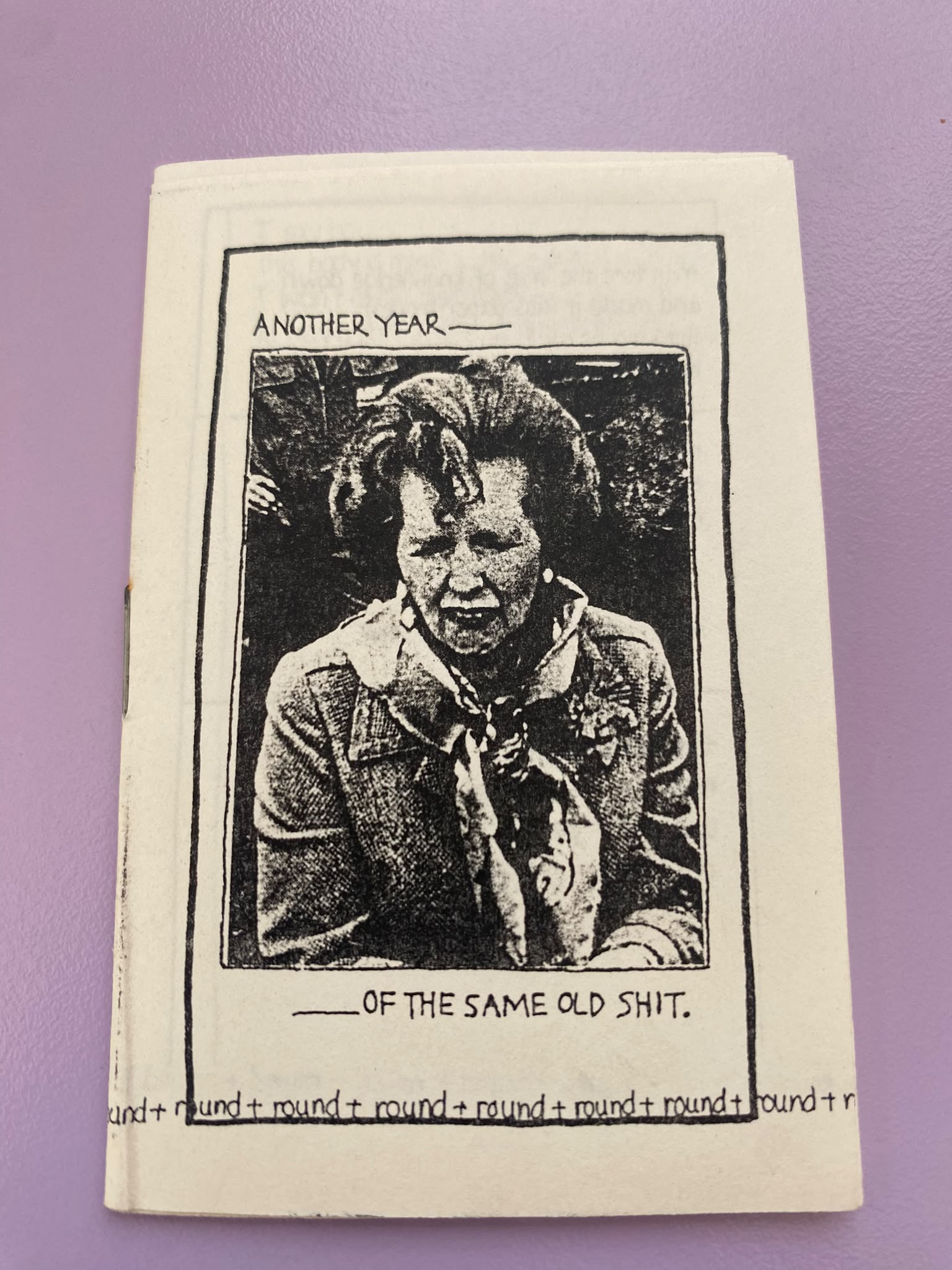
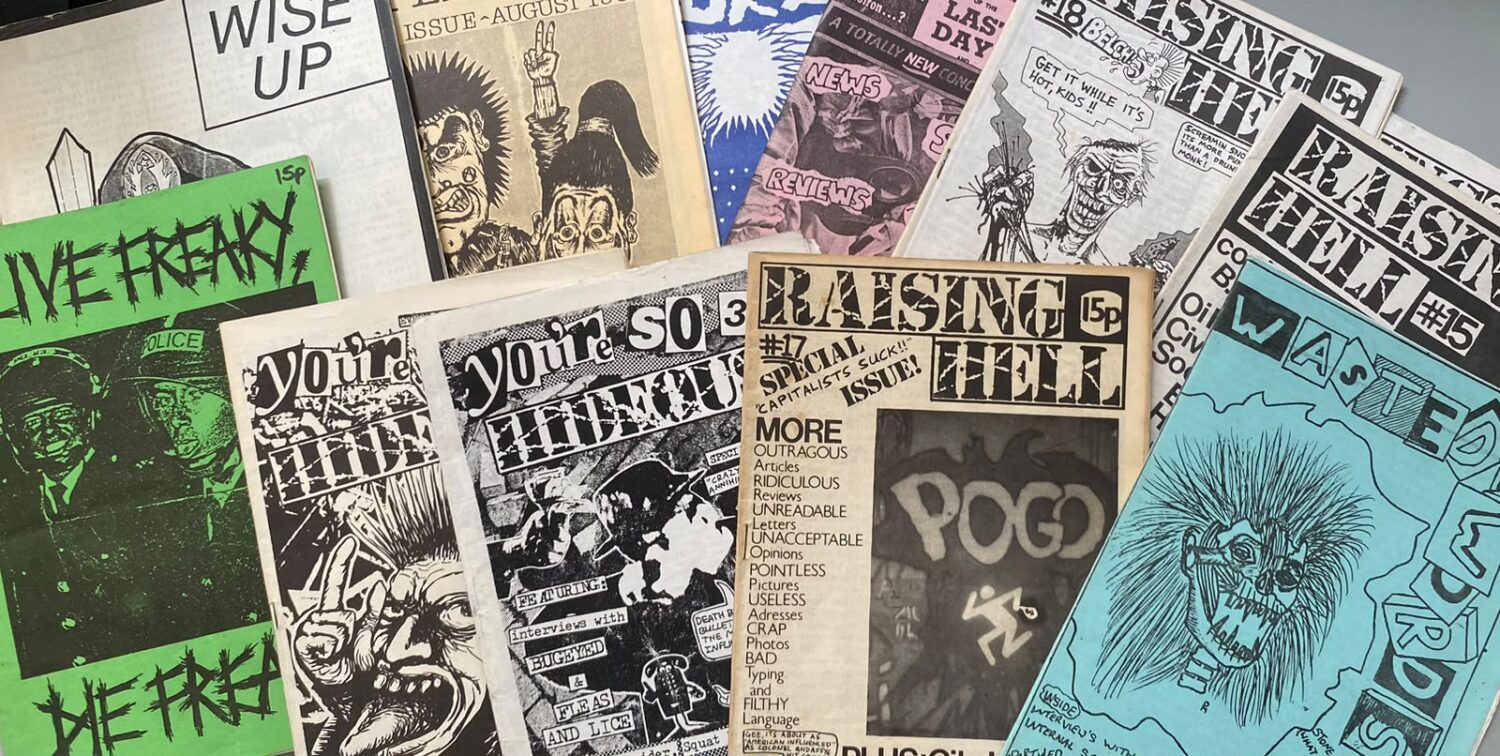
Dunstan: Yeah, I mean even the whole zine culture. You know that was just as big a part of it. And we used to do leaflets and pamphlets and booklets that we would give away at all our shows for free, or we would go to other shows and just give them away. And that was a massive sharing of ideas, which obviously now everybody can just do online. We’ve collected a lot of that material for the archive.
I don’t have any qualifications at all, but that whole scene in the early ’80s gave me the freedom and permission to become an artist or a musician. There was something about that culture—there were no rules like, “this is art and this isn’t.” It was a brilliant time for flourishing, for working out who you are and what you were capable of. I empathize with young people today, finding those cracks is much much harder. Or finding the time, you know. We had the time, we had the enterprise allowance scheme, for instance, or being able to sign on [for unemployment benefits], or we were squatting and all that sort of stuff.
Helen: Even renting was kind of feasible then, wasn’t it?
Seth: Yeah, totally. I mean, I remember growing up when every small town in the ’80s would have a bedsit district, where, if you were of a lower class who didn’t attend university, you and your mates on the dole could live there for a couple of years. And most people just genuinely turned a bit of a blind eye to it. You know, you didn’t have a lot of this “fucking scroungers” mentality. I mean, you obviously did, but people were quite prepared to allow others to just live. So, you could be a poet, a DJ, or an artist. It’s different for young people now.
Dunstan: It’s interesting—the conversation we’re having isn’t actually about what’s in the archive. I mean, I’m obsessed with what’s in it and us doing an exhibition for it, but that it ends up bringing up so much around politics and music and collecting is important. I’m a lot older than Seth, obviously, but, for a couple of people from older generations to be invigorated to engage with younger people, trying to find common ground, I think is really important!
Helen: So, can I ask, when you talk about the exhibition, are you planning on just doing one, or will it tour? Have you thought about locations?
Dunstan: We haven’t really had those conversations yet. I want to do an exhibition that tours around the world!
Seth: Yeah, it would be nice if there was funding for any of this.
Dunstan: Yeah, that’s a problem. I can just have these ideas, and Seth is the one who brings me back down to earth with questions of how to pay for it.
Zanne: Could you get some funding somewhere?
Helen: I wondered if that could maybe be a part of the networking, you know.
Seth: Oh, absolutely! It’s very early days, so we’ve been slowly cataloging the archive material, and MayDay Rooms have very generously given us the space to house the material there, because obviously it’s sympathetic with their interests. It would probably be a process to think through how we can then get this material toured around and to get funding at some point. But it’d also be good to bring in other people who are interested in the archive for their own interests or research. The idea isn’t totally bound.
Dunstan: I’ve had a bee in my bonnet for years over the world of academia. It really pissed me off when anarcho-punk became big in those circles. I was seeing all these conferences going on that were about things I was involved in or that specifically mentioned Chumbawamba, but when I asked whether I could attend—because you know, that’s me you’re talking about—I wasn’t allowed to attend because I wasn’t an academic! So, it’s just privileged people talking to each other!?
Zanne: The hierarchical, institutional, “we have the knowledge” gatekeeping?
Dunstan: Yeah, and how do they know they’re getting it right? So, this is an opportunity for us to redress that and talk about it all from a position of our own lived experience.
Seth: This also helps explain why there’s an absence of the material in the archive. A lot of people of that generation are living more comfortably now than they were 20 or 30 years ago and are buying back their youth online. There’s an entire secondary market now, like old copies of Class War or whatever being sold for 30 quid!
I would argue that if those people still have any of their initial principles, they would scan that material and donate it to the archive, right? Where they can come visit it and be with everyone else who now has access to it. I mean, obviously people can do what they like, but it has proven quite difficult to get materials because people really feel that they’re sitting on a fortune in the collector’s market, which might help them in their retirement or whatever. And fair enough. I mean, people don’t get adequate pensions, do they? But it has been a bit of a struggle.
Dunstan: It hasn’t been a struggle getting Chumbawamba stuff, though, has it?
Seth: No, absolutely not. We’ve got too much Chumbawamba stuff. Too much! Haha.
Helen: Yeah, going back to your point about it being difficult to get hold of materials: personally, the people I know that were real collectors find it hard to let things go. You know, they still want all that stuff.
Seth: Haha, I’ve been sitting here slagging these people off, and I’m literally sitting on…just to demonstrate, a copy of Class War and some copies of the Rock Against Racism zine Temporary Hoardings [holding up both]. So, I get it. I’ve also got a huge pile of comic books here that my girlfriend wants me to burn.
Dunstan: I was surprised how easily I found it to hand over all my stuff.
Seth: It was an exorcism, mate.
Zanne: I wonder if there’s also another aspect to that, of people who have this anarcho-punk material, who have collected it themselves over time and just held on to it. There’s a worry about who they let it go to and the possibility of losing control of the narrative and the genuine experiences or stories.
Seth: I think that’s definitely true. I’m kind of shocked that given punk’s cultural significance in the arts and the political economy of punk as well—there’s loads of money being made out of punk’s memory—there isn’t a dedicated punk archive in Britain. I think there’s a few attached to universities. In fact, Crass’s material has just gone to Manchester University. There is also the England’s Dreaming: The Jon Savage Archive at Liverpool John Moores University. There’s a few other small bits and pieces, but no large dedicated punk archive, which I find kind of shocking.
Obviously, there are social movement archives, like MayDay Rooms. There’s also the Working Class Movement Library in Salford, Manchester, the anarchist archive Sparrow’s Nest in Nottingham, and Spirit of Revolt in Glasgow. I know that all of those do have small collections of anarcho-punk material, but again, there’s no dedicated work to collect a huge punk archive. So, I think that would be something interesting to do. But if people are worried about their materials going into an academic institution or something, then they should consider MayDay Rooms or one of those other spaces as a place to deposit their materials, where the public can access it and use it.
Dunstan: That was a very important thing for Chumbawamba—to agree to give our archive to MayDay Rooms. We really wanted to ensure that it was available to everybody to see and use because some places do make it difficult to go into and navigate.
Zanne: Those are really interesting points, actually. I was excited by the idea of the MayDay Rooms having an anarcho-punk archive, where the collection isn’t static and the materials feel alive and active, with people easily accessing and engaging with it. Most other archives have very strict rules around access and handling.
Helen: Yeah, in most institutional archives you wouldn’t really be able to go and look through stuff like that in the same way as you can at MayDay rooms.
Seth: In the last few years, the archivists at MayDay, Lukasz, Rosemary, and the rest of the team, have been really thinking through how to develop an open stack system. Basically, they’re developing these stickers that run along the front of all the boxes of material, identifying key dates, figures, and events. So, a box might say something like “poll tax campaign,” and this then relates to these other campaigns. Then people can just come in and look without the mediation of some expert. Obviously, people at MayDay are more than happy to talk through material with visitors, but lots of people just come in and drag a box off the shelf to take downstairs and look at it without someone looking over their shoulder. I’m not saying we don’t get academics coming into MayDay Rooms. I think they do, but it has a very sort of hands-off relationship, and that’s been really generative because you get lots of different people coming in.
Its core mission has always been to connect the archives and collections to people who are actively involved in campaigning now. So, we get lots of young people who are involved in renters’ unions, for instance, coming in to look at collections around squatting. For Chumbawamaba, it’s particularly important for their materials to go to a space like that, rather than some big institution where you already have to have some prior knowledge to find it and it’s heavily mediated.
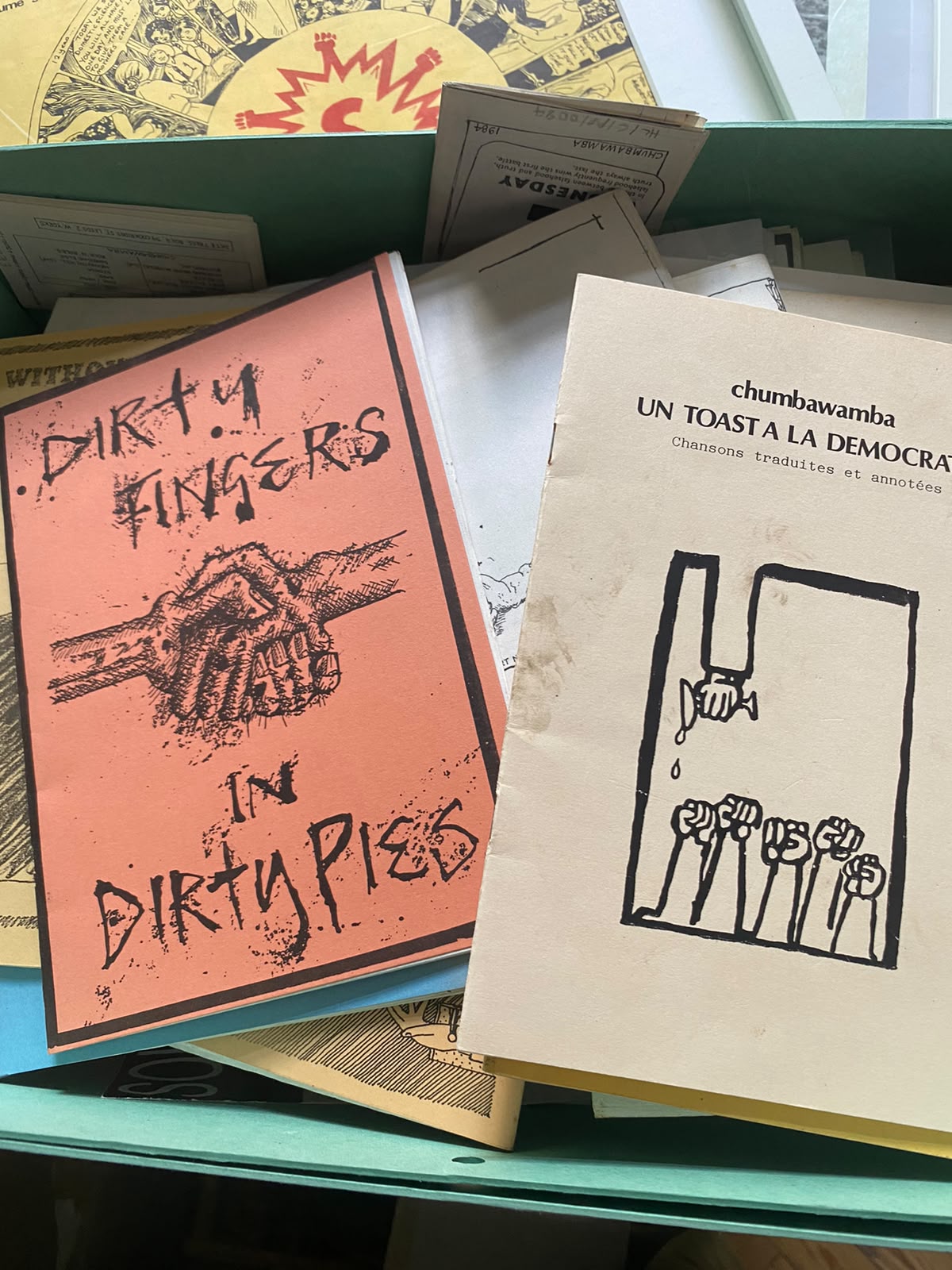
Dunstan: It was encouraging to see how everybody in the band got involved. It was that thing about one man’s rubbish being another man’s treasure. Crazy, because we went out to Otley to see Boff, and he was like, “Oh, I’ve no idea if you’ll want this.” And Seth’s there wetting his pants with excitement: “What this!?” It was some really early Crass flyers, and Boff was like, “I mean, this isn’t Chumbawamba, but you can have it if you want.” Seth’s eyes got huge!
Seth: Yeah, I thought I was going to have a stroke. I mean, that’s often the way, isn’t it? People bring things in, and it’s like, “oh, wow!” So, it is important in thinking through access to this material moving forwards. Most of the stuff that MayDay Rooms collects was produced en masse, right? So, it’s quite easy to replace that material if, god forbid, it ever went missing or anything.
Obviously, what Chumbawamaba have given is not just the materials that they produced—there may have been thousands of these leaflets made, right?—but also lyrics, personal communication and letters, all of which are one-offs. So, with those rarer materials, there may be a need to implement some sort of mechanism where you come and look at it under observation. All things to discuss.
Zanne: Yeah, maybe have people sign-in and sign-out or something?
Seth: I think that was the other thing that I was excited about when we did the opening launch event. I was expecting it to be mostly people of a certain age, like us, basically. But it was great just how many young people were there, how many people of color, and how many young women were there, etc. It did feel really exciting to be having those conversations with them because usually you go to an anarcho-punk event and it’s often some sort of exercise in hagiography where everyone’s in there saying, “this band was the best,” or correcting details of anybody else who speaks. The micro-history of Crass, or something.
Zanne: Yeah, I’ve been to those too. Everyone wanting to talk about how much it meant to them personally, with their own stories. We all have those stories!
Dunstan: There’s nothing worse than a Q&A where somebody puts their hand up and goes, “This isn’t a question as such,” and you just think, “oh no!” and ten minutes later you know their life story.
Seth: And it’s usually boring!
So, with the archive, our hope is to emphasize anarcho-punk’s generative capacities to build social movements, rather than just focusing on the bands. However, it’s clear Crass kickstated it all. Nonetheless, I think it would be fair to say that Crass’s version of anarchism is a sort of a hodgepodge or bricolage-y thing that mixes pacifism, individual morality, and all that sort of stuff.
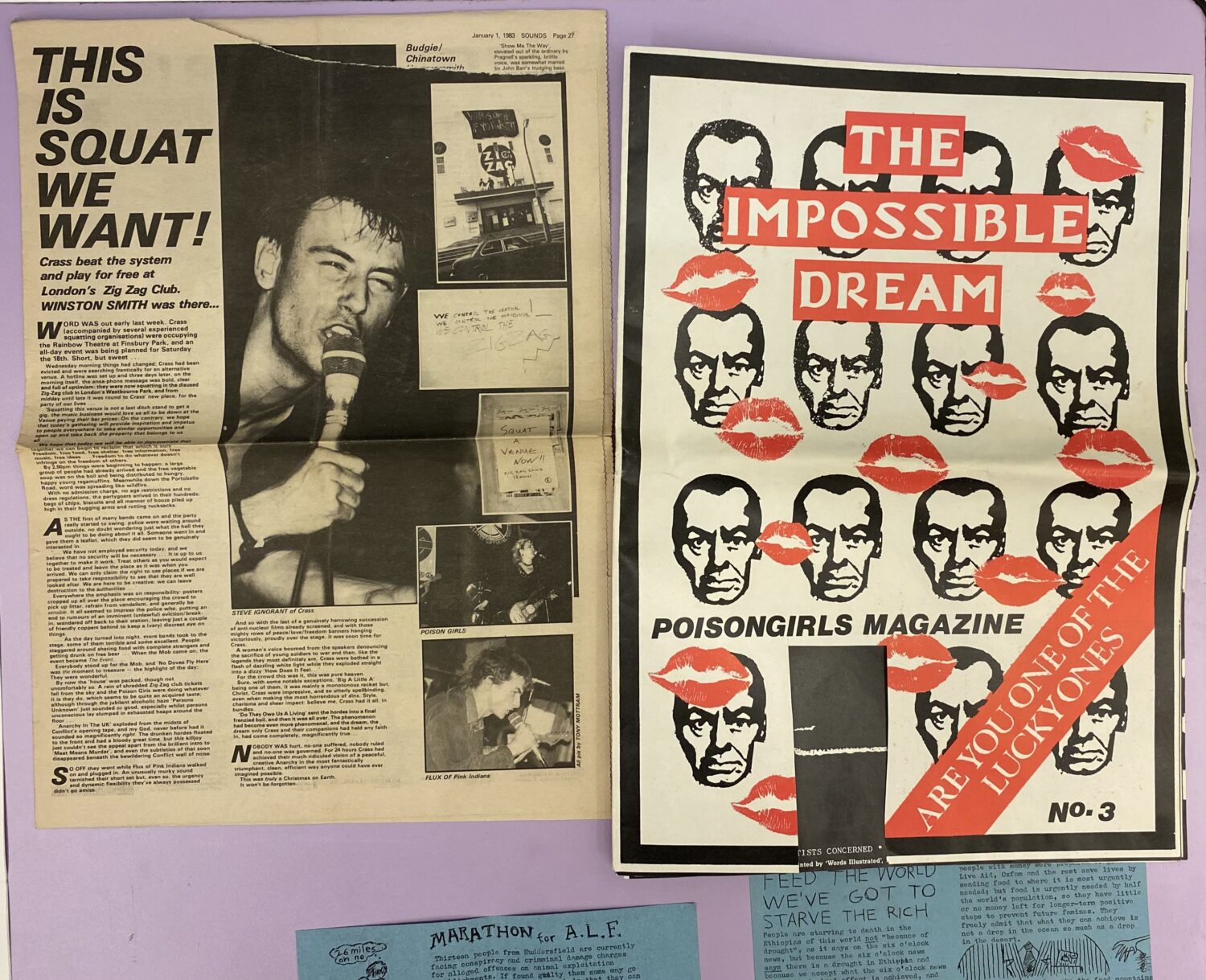
I would argue that by the time that you get to the immediate second generation of Bullshit Detector compilations, you’ve got bands with a much clearer, more shared conception of anarchism that maybe has a closer relationship to traditional versions, like class struggle Anarchism. You start getting this big rejection of pacifism. So, I think it’s important to recognize that, while everyone would agree that Crass were hugely influential, their politics very clearly were not the politics of the bands that come after them. There were obvious political distinctions within anarcho-punk just within a couple of years of them.
Dunstan: Yeah, that’s a really interesting point. I mean Crass were the catalysts, really, weren’t they? The jumping-off point, I guess. Then there was a moment where you decided to move away from it. That’s why Crass ended themselves in 1984, didn’t they?
I know they felt the pressure of it all themselves, so it was probably a good thing. It let us all go off on our own and discover for ourselves. I realized at that time, there was a moment where you were just waiting for the next Crass release to see what they had to say on any particular topic so you could adopt that stance immediately.
Seth: That is interesting because you do still get these resentments—people saying Crass weren’t good enough on this or that perspective. We’ve just come across some materials relating to the Conway Hall gig, where famously the far right/neo-Nazi British Movement turned up to beat the fuck out of Crass. Martin Lux from Class War and others rallied a huge anti-fascist troop who managed to smash the fuck out of these Nazis before they could murder Crass. Then immediately after that, Crass released this statement basically saying, “Well, the left are just as bad as the right.” So at that stage people were like, “What are you fucking talking about?!”
Weirdly, the band who were supporting them at that gig were the Rondos from Rotterdam, who then go off and record their own single criticizing Crass. The Rondos then also end up becoming members of the Ex, and then the Ex go on tour with Chumbawamba. So these things are always evolving and there are interesting connections running throughout.
Dunstan: I’d be fascinated to know how all the young bands playing now interact with each other, which I suppose goes back to your idea, Seth, about trying to work that out in a way. Well, it’s only sort of through observation and friendships. Obviously, there are bands and gigs happening every week in London, which are benefits for Palestine or benefits for trans rights.
Seth: Yeah, and that initial wave of anarcho-punk was very diverse and experimental. I think it would be fair to say that at some midpoint in the ’80s, when both American and British punk were moving more towards hardcore, things became slightly generic for a period. Although, obviously all those bands are still amazing and really important, and we were in the grips of a global hardcore revival, with the mainstreaming of certain acts.
So, again, it makes me think that there’s a proposition in reopening a conversation with younger people who’ve been recently drawn into punk to talk through its politics and roots, that it’s not just about crowd killing in a mosh pit. If you’re into alternative music now, you’re probably into everything from contemporary hardcore to free jazz to noise or whatever, right? There seems to be this new big stew of experimental music forms, electronica, and everything. So, I’m definitely interested in seeing anarcho bands out there, but whether they’d be classified as punk anymore, even by themselves, I don’t know.
Helen: It’s the same in Bristol as well.
Seth: They are still happening day in, day out, at the moment. I don’t know if this is just my age or whatever, I get that there’s friendships between some of those acts when I go to gigs now but I don’t really get a sense that they’re directing the politics themselves. They’re more reactive to something. They’re reacting to the right or to this particular thing that’s happened, but are not necessarily setting an agenda collectively together, and I’m really interested in thinking that through. But again, I could be wrong.
Helen: I live very near to BASE in Bristol, which is the anarchist center there, and that seems to be populated by a lot of the same young people that I see at gigs, and it’s very young, queer, diverse, inclusive groups of people in and out of there.
Seth: I did a table at the Anarchist Book Fair last year for the first time in years, and it was interesting because in the morning, it was mostly people of a certain age, obviously my age, all grey-haired wandering about looking for books on Workerism and then carefully going off in the afternoon to have a well-deserved nap or to watch the football, and then around noon—noon, being a daring dawnlight raid for young people, haha—all these young comrades turn up who were all really incredibly young and punky-looking people. It was interesting, these two generations who aren’t always very connected. And maybe there are some good reasons for that—there has been some pretty horrific transphobia amongst older comrades in the anarchist scene unfortunately. But it was very hopeful to see so many young people turning up because I really have felt that Corbynism and other projects like the DSA in the States had maybe rendered anarchism a bit irrelevant.
I suppose the bigger question for me though is that there is obviously a revival of interest. I mean, that does often happen as people age. You know, where they begin to reflect on their past, and there’s now a sort of publishing industry dedicated to anarcho-punk.
Now, I’m not dismissing any of those books, but I think it would be fair to say that quite a lot of them are written by people who were there, and they tend to be more fan-orientated, like, “Crass did this for me…,” and I think Dunstan and I are trying to reframe that into “What did anarcho-punk do for anarchism?” It seems very clear to me that British anarchism probably would have died on its ass in the 1970s if it hadn’t had this influx of young people who were joining that movement outside of the traditional routes, whether that had been the university system, the left itself, or trade unionism.
Dunstan: Yeah, there was a wave of people who became part of that movement through cultural means rather than simply political means. I remember Boff from Chumbwamba saying once in an interview that he went to an anarchist meeting in Burnley where he grew up, and he said it was one of the most boring events he’d ever been to. But then he heard Stations of the Crass and thought it was the most exciting thing he’d ever heard in his life. It’s just a different way of getting into politics.
Seth: That was the interesting thing about punk, wasn’t it? In a sense, it gave people permission to act. If there’s one lesson from punk, it’s this emphasis that anyone can do it. I think that really brought thousands of young predominantly working class kids into the anarchist scene in the ’80s, and it radically transformed the possibility of that decade. I think all the ideas, ways of organizing and what were the single issue campaigns you see over that decade, they end up laying the groundwork for what will then later become the alter-globalization movement. And I’m not saying that the more traditional and anarchist organizations or people attached to syndicalism or an anarcho-communism weren’t involved in that groundwork, they certainly were but it seems very clear to me that it was really led by the energies of young people coming into that movement through music.
That’s also something interesting about this proposition now, as a sort of organizing modality for young people. There’s lots of shit happening; the world is burning. Genocides are happening left, right, and center, and we need to move. So how do we move? I think the left seems to constantly think it’s about convincing people of the correct ideologies. But actually, I really think you motivate people through engaging with them in culture and the production of cultures.
Helen: So, what if people had things to donate? What are you particularly interested in?
Seth: I think we’re interested in material that directly connects to social movements, with a strong emphasis on the political. Anything from benefit gigs, leaflets, or essays that people produced. Also materials the bands produced themselves, whether that’s singles, tapes, fanzines, or whatever. Penpal letters that perhaps demonstrate how movements are organized. Posters, banners, everything from small benefit gigs for Hunt Sabs, Culture Shock, whole food co-ops, to larger benefits in Amsterdam for a big anti-Shell mobilization, especially any visually interesting stuff. Also things that people may have been reading that would connect them to wider political subcultures. When Chumbawamba donated their material, they gave copies of Class War that they had written in, for instance.
Zanne: Does it have to be UK-based specifically?
Seth: Million dollar question! At the moment, we are predominantly collecting materials from that first wave of British anarcho-punk, but obviously, no, it doesn’t have to be UK-based. We’ve got a lot of anarcho-punk fanzines from the States. We’ve got a fair few issues of Maximum Rocknroll, Slug and Lettuce, and CrimethInc, for example. Get in touch or stop by to see what we have!
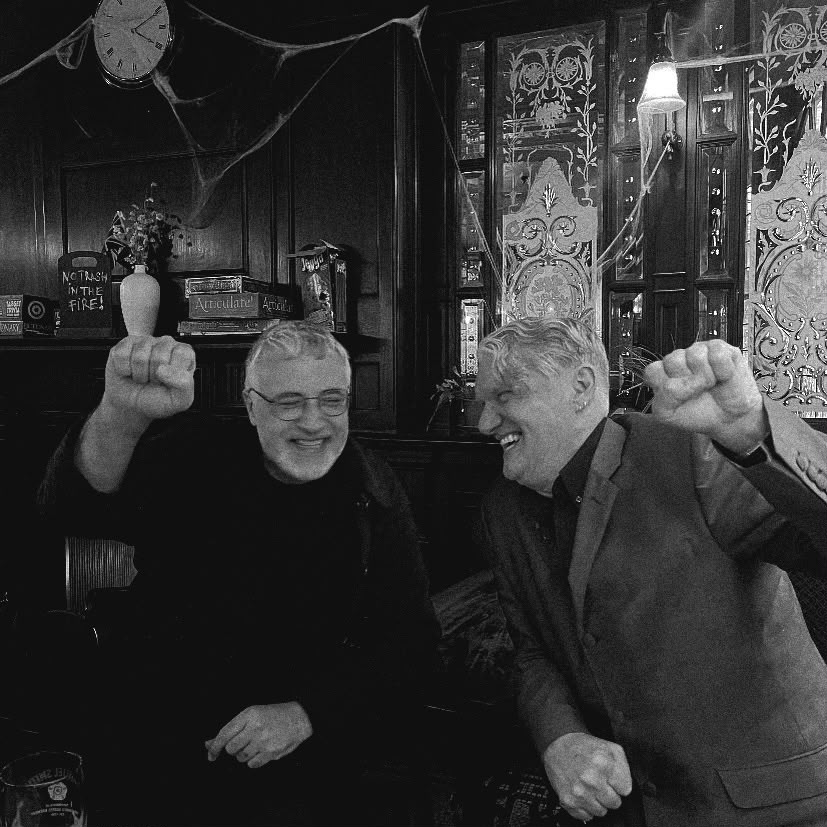
MayDay Rooms is located at:
88 Fleet Street
London EC4Y 1DH
United Kingdom
https://maydayrooms.org/ | Punkproject@maydayrooms.org
Hours: Wednesday–Friday, 11 am to 6 pm, with occasional Saturday open days and a programme of various events.